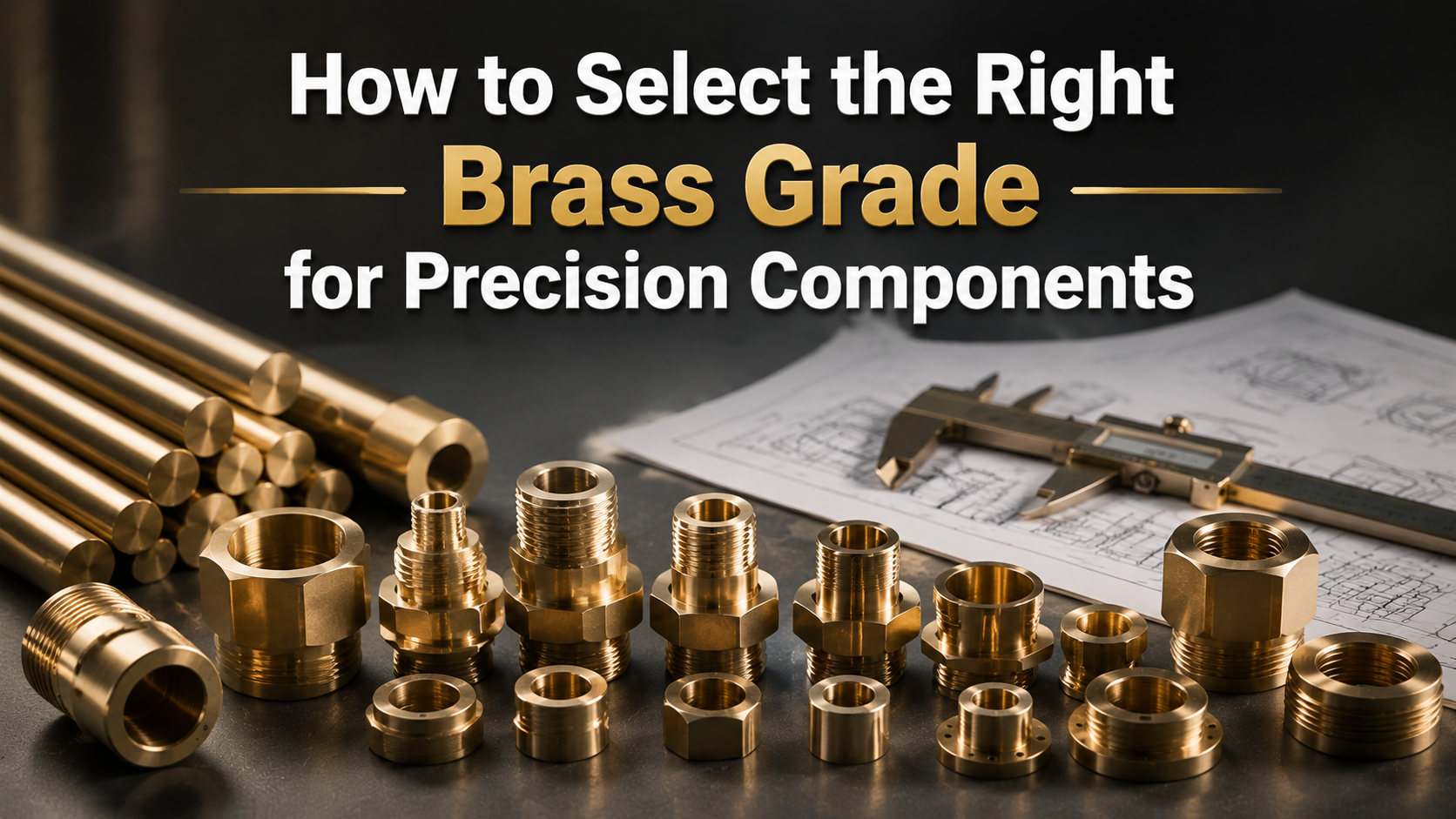
How to Select the Right Brass Grade for Precision Components
Selecting the right brass grade is not an easy task. The choice made affects the final performance, strength, and durability of the component. Incorrect selection could mean higher machining costs, increased product failure rate, and even component failure in practice.
This is why engineers take the time to figure out the exact needs of each component before manufacture starts. Regardless of whether the part is being used in electrical appliances, plumbing, automotive, or the engineering industry, selecting the right brass grade upfront makes a difference.
First Figure Out What the Component Is Supposed to Do
Each precision component has its own purpose. While some components need to conduct electricity, others have to withstand certain pressure, vibrations, or repetitive tightening operations. For this reason, the very first step towards successful manufacturing of a precise component is to figure out the application of the finished product.
Select a Brass Grade with Good Machinability
Good machinability means improved surface finish, tolerance control, and extended tool life.
Ever wondered why some components turn out more accurate than others? This is because the right brass grade ensures the uniform chip formation when being machined. The result is improved quality, less material waste, and reduced production costs for CNC turning, milling, threading, and drilling operations.
Balance Strength with Manufacturing Considerations
Different applications require a different balance between strength and elasticity of materials. Components that should withstand certain pressure, repetitive assemblies, or vibrations require a stronger brass grade.
Components which require forming or forging require a brass grade with better ductility, so that they don't crack during manufacturing. It is important to consider the full manufacturing process, rather than only the finished drawings, when selecting a suitable material.
Match Material to Working Environment
Working conditions also affect material selection. Components which are going to be used in plumbing, HVAC systems, valves, and sanitary fittings operate under certain moisture, oils, temperature fluctuations, and humidity.
For this reason, corrosion resistance is another factor which has to be taken into account when choosing a suitable brass grade. Additional treatment of surfaces such as nickel, chrome, tin, silver, or zinc plating also increases durability and improves appearance in many applications.
Consider Conductivity and Quality of Raw Materials
Electrical components not only require good machinability. They also demand reliable conductivity during their operation life. Terminals, pins, connectors, and switchgear components need brass grades with a perfect combination of electrical and mechanical properties.
Also, the right choice of raw material in the form of solid rods, hollow rods, or profiles, makes it possible to cut machining time, minimise waste, and improve consistency of large production runs. Good material quality also guarantees consistent results in the inspection and manufacture of components.
Test Before Starting to Manufacture
Component manufacture does not stop with raw material selection. Before launching a mass production, it is recommended to do several tests on sample components to check their dimensional parameters, threads, surface finish, and functionality.
Testing guarantees the correct work of the selected material. This way, manufacturers reduce production risks and ensure that every component produced meets the customer's requirements.
Conclusion
Selection of the right brass grade is one of the most crucial steps in precise component manufacturing. The right choice of material ensures improved machinability, increased durability, reliable performance, and reduced production cost in the long term. Evaluation of the application, machinability, corrosion resistance, conductivity, and testing of the material guarantees high-quality components for every component manufactured.
For custom, precise components with excellent manufacturing experience, Ishita Industries offers high-quality solutions.

