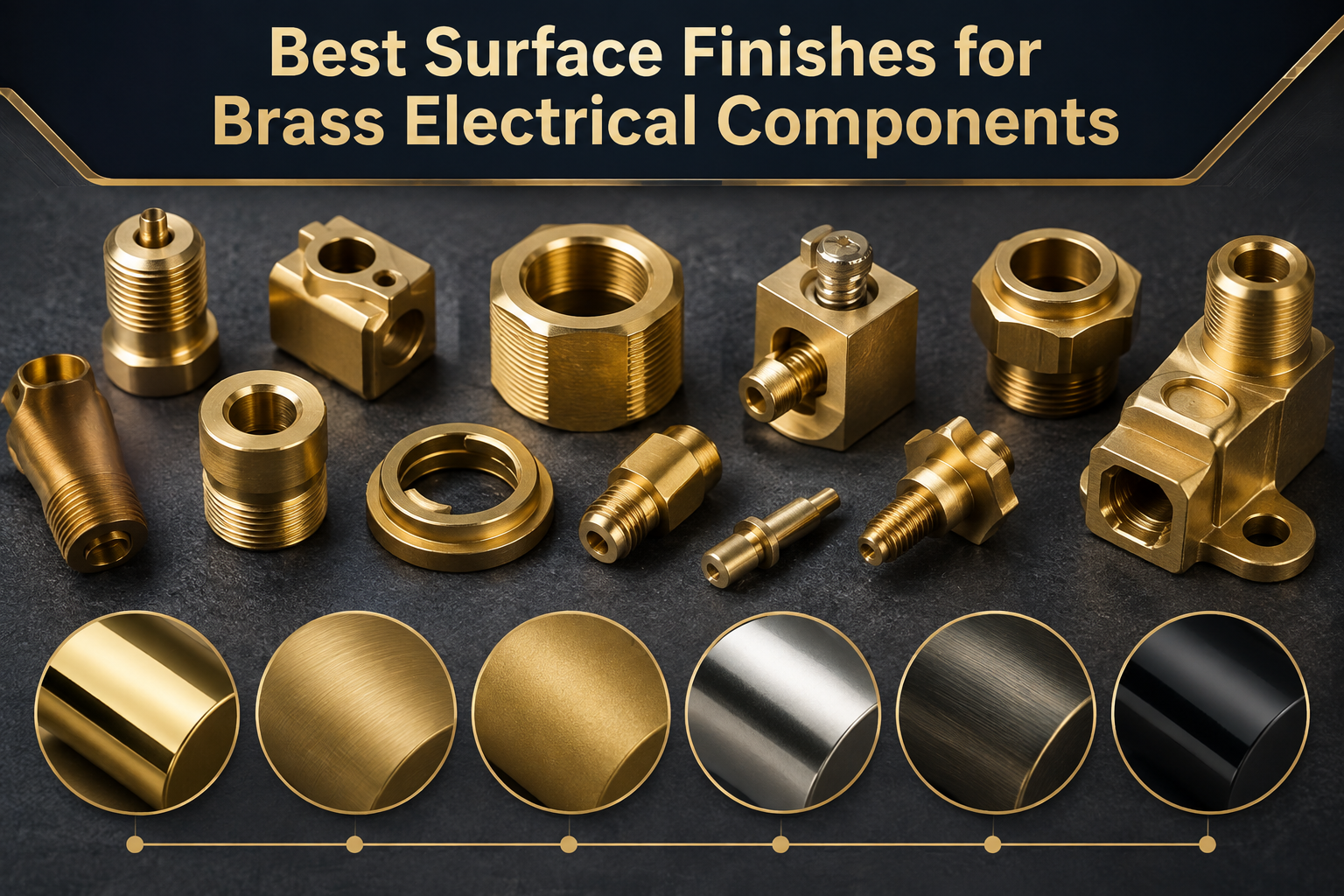
Best Surface Finishes for Brass Electrical Components
The quality of the surface protection directly impacts the operational efficiency of the brass electrical component. No matter how well-designed the component is, if the surface cannot withstand moisture, corrosion, or constant use, the reliability of the item will suffer.
Therefore, the importance of the surface finishing of the brass electrical component cannot be overstated since it affects conductivity, enhances longevity, and increases the performance consistency of the item.
Every application has different needs, so the choice of the best finish depends on its particular properties. Knowing how it functions helps a lot when picking the optimal option.
Understand the Importance of the Protective Layer
The natural conductivity and machining ability of the brass do not guarantee performance stability since contact with water, chemicals, or the atmosphere may lead to surface tarnishing.
The surface finishing creates a layer that protects against corrosion, creates the opportunity for stable electrical connection, and also increases resistance to mechanical damage, makes soldering easier, and enables consistent performance in challenging conditions.
Picking the Finishing Depending on the Working Conditions
As the conditions for electrical parts are quite varied, different surface finishing options are available for the brass electrical components. The components used inside the electrical panels differ from the outdoor ones in their finishing type and properties.
It is no surprise that various plating types are offered by the manufacturers. Each of them solves specific problems related to operating conditions, chemical and humid exposure, and so on.
The Most Popular Surface Finishes
Nickel plating is chosen quite often due to its high corrosion resistance, surface hardness, and nice appearance. It is used for connectors, cable glands, switches, and other electrical hardware.
The solderability and oxidation protection properties make tin plating very useful for many components. The outstanding electrical conductivity of the silver plating is perfect for items with high currents. The gold plating ensures resistance to the oxidation and reliable transmission of signals. It is great for precise electrical contacts. Finally, zinc plating provides effective corrosion protection and economy of the process.
The Advanced Protective Coatings
Sometimes additional protection is needed for brass electrical components, and the metal plating is not enough to ensure it. Electrocoating and electrophoretic lacquering create a protective film over the entire surface of the component, including hard-to-reach areas and complex shapes.
They increase the resistance to moisture, chemicals, and any other exposures. Besides, the coatings help to maintain the appearance of the item and prolong its service life.
Evaluating the Properties Other than the Appearance
When choosing the surface finish of the brass component, engineers consider not only the appearance but the electrical conductivity, solderability requirements, the expected lifetime, environmental exposure, thickness of the coating, and the compatibility with other metals.
A finish that is too thick might influence the fit of the component. An unsuitable coating may negatively impact the electrical performance of the part. Consequently, the surface finish should be picked carefully.
Inspections Ensure Reliable Performance
Even the best coating needs to be verified during the inspection stage to make sure that all requirements for it are met. The manufacturers check the thickness, adhesion, accuracy, and surface quality of the coating.
These inspections help to ensure that all the items perform consistently. In this way, the customers get the electrical components with reliable conductivity and durable protective coating.
Conclusion
The surface finishing plays a critical role in the production of brass electrical components. The coating may be of nickel, tin, silver, gold, zinc, and others depending on the application and needs. The appropriate choice of the surface finish will improve durability, conductivity, resistance to corrosion, and other important properties.
For the precisely machined brass electrical components with customised surface finishes, Ishita Industries provides high-quality manufacturing with strict quality controls and customer-specific requirements.
Contact Ishita Industries now for the perfect coating for your next component project.

